No-Mess Ink Handprints: How to Get a Perfect Print
No-mess ink handprints are the cleanest, most beginner-friendly way to capture your baby's tiny hand or foot. Instead of visible ink or paint, an inkless wipe coats the skin with a clear solution that reacts only with specially treated paper, producing a crisp print with nothing to wipe off the baby afterward. It is the method most parents reach for first, and with a little technique, the results are beautiful.
This guide covers exactly how the method works, what you need, step-by-step technique, and how to troubleshoot the most common problems, so your first print comes out clean, clear, and frame-ready.
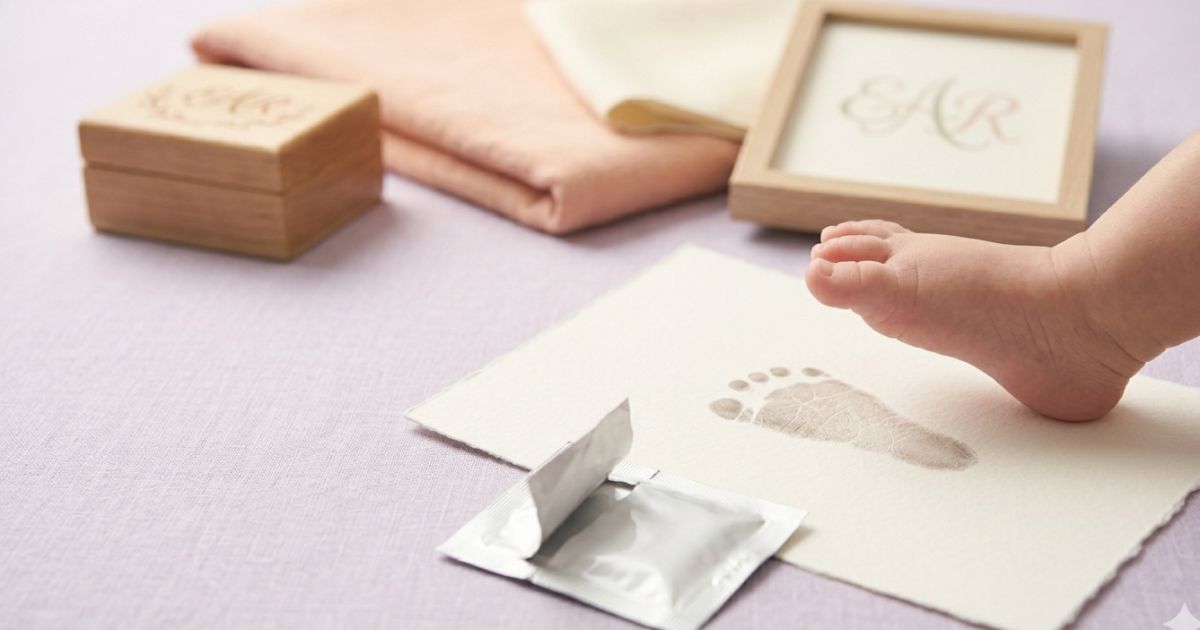
What Is a No-Mess Inkless Print Kit?
An inkless print kit uses a two-part chemistry system. The kit includes a wipe coated with a clear, colorless solution and a sheet of specially treated paper. You wipe the baby's hand or foot with the wipe, press it firmly to the paper, and the print appears as the two solutions react. No ink touches the baby's skin, nothing visible transfers to clothing, and cleanup is simply washing with soap and water. The result is a clean, single-color print (usually a warm grey or dark tone) that is ready to frame immediately. Most kits include several wipe-and-paper sets so you have multiple chances to get the print you want.
Why Choose an Inkless Kit
- Zero mess. No visible ink on skin, clothing, or furniture.
- Perfect for newborns. The gentle wipe is safe and quick for sensitive newborn skin.
- No drying time. The print appears and is ready to frame straight away.
- Multiple attempts. Most kits include spare sets so you can try again.
- Works solo. You can manage it with one hand supporting the baby, making it easier than paint or clay for parents working alone.
Comparing inkless kits with other methods? Our complete handprint keepsakes guide covers all five approaches side by side, and our clay vs ink kits comparison puts the two most popular against each other. For kits that combine inkless with a ready-made frame, see our best baby handprint kits roundup.
What You'll Need
Kit contents (what to look for)
- Inkless wipes (pre-coated with the clear solution)
- Treated paper sheets (the reactive surface)
- Ideally: a frame or mount included, plus spare wipe-and-paper sets
From you
- A calm, full baby (just after a feed is ideal)
- A helper if possible, one to hold the wrist, one to manage the paper
- Soap and water for a quick wash afterward
Step-by-Step: Getting a Perfect Inkless Print
- Time it right. Work when your baby is calm and full. A drowsy baby after a feed relaxes their hands more than an alert one.
- Open the wipe carefully. Remove the wipe from its packet just before you use it so it does not dry out.
- Wipe the hand or foot. Gently coat the palm or sole with the wipe, covering the whole surface evenly. One gentle pass is enough.
- Act quickly. Press the hand or foot firmly and evenly onto the treated paper within a few seconds of wiping, before the solution dries.
- Press, do not drag. Apply even pressure across the whole hand or foot, hold for a few seconds, then lift straight up. Any dragging smudges the print.
- Let it develop. The print appears within a minute or two. Do not touch the paper surface while it is developing.
- Label it immediately. Add the baby's name and date before you forget, in pencil on the back or with a fine pen on a border.
How to Handle the Paper
Hold the treated paper only by the edges. Any contact with the reactive surface leaves a mark, which is why prints sometimes come out with smudges around the edges. Lay the paper on a flat, smooth surface before pressing the hand down so you have a stable base. If the kit includes a frame, you can press directly into the frame insert for a perfectly aligned result.
Hands vs Feet: Which Works Better?
For newborns, feet are almost always easier. Newborn hands have a strong palmar grasp reflex that causes the fingers to curl when the palm is touched. A foot, by contrast, relaxes more readily and lies flatter on the paper for a cleaner print. If you want a hand print from the newborn days, stroke the back of the hand and wrist to encourage open fingers rather than pressing on the palm. For more on this, see our guide on capturing a newborn footprint and our overview of handprint vs footprint keepsakes.
Troubleshooting Common Problems
- Print is faint or patchy: the wipe did not coat the skin evenly, or you waited too long before pressing. Re-wipe and press within seconds.
- Smudged edges: the hand or foot dragged slightly. Press straight down and lift cleanly.
- Fingerprints on the paper: the reactive surface was touched before use. Always handle by the edges only.
- Missing fingertips: the fingers were not fully flat. Gently press each fingertip individually after the main palm press.
- Grasp reflex closed the hand: try a footprint instead, or wait until after 4 to 6 months when the reflex fades.
Displaying and Preserving the Print
Most inkless prints are ready to frame straight from the kit. If the kit includes a mount or frame, use it. If not, a simple white or cream mat and a plain frame let the print speak for itself. Keep it out of direct sunlight, which fades the print over time, and behind glass for long-term protection. For display and storage options in depth, see our guide to preserving and framing baby handprints.
Inkless vs Other Methods
Inkless kits are the cleanest and fastest method, but they do produce a flat, single-color print. If you want color, a paint or ink print gives more creative flexibility. If you want a 3D impression, clay or salt dough is the answer. And if you want the most detailed, lifelike result, a casting kit is worth the extra effort. The full comparison, including mess, durability, cost, and finish, is in our best baby handprint kits roundup.
Frequently Asked Questions
Is an inkless print kit safe for newborns?
Yes. Inkless wipes are designed for skin contact and leave nothing visible on the baby. As with any product, choose a kit that states its materials are baby-safe and non-toxic. Look for products carrying the AP seal from the Art & Creative Materials Institute, and for general infant skin-care guidance, the AAP's HealthyChildren.org is a reliable resource. Wash the hand or foot with soap and water afterward.
Why is my inkless print faint?
Usually because the wipe did not coat the skin evenly, or because too much time passed before pressing. Re-wipe gently and press the hand to the paper within a few seconds.
Can I use an inkless kit on a newborn?
Yes, and it is one of the best methods for newborns because there is nothing to clean up afterward. Footprints are usually easier than handprints in the first weeks due to the grasp reflex.
How do I stop fingerprints appearing on the paper?
Always handle the treated paper by its edges only. Any contact with the reactive surface before printing leaves a mark.
How long does an inkless print last?
Inkless prints are light-sensitive, so keep them out of direct sunlight and behind glass. Stored properly, they last for many years.
Key Takeaways
- Inkless kits are the cleanest, fastest, and most newborn-friendly way to capture a handprint.
- Time it after a feed when baby is calm and relaxed.
- Handle the paper by the edges only to avoid fingerprint smudges.
- Press and lift cleanly, no dragging, and act within seconds of wiping.
- Feet are easier than hands in the first weeks due to the grasp reflex.
For more keepsake methods and display ideas, head back to our complete baby handprint keepsakes guide.