DIY Nursery Decor: The Complete Budget-Friendly Guide
A beautiful nursery does not require a designer budget. With a little planning and a few weekend projects, DIY nursery decor lets you create a room that feels warm, personal, and put-together for a fraction of what a furnished nursery costs. The secret is not spending more, it is choosing a simple palette, making a handful of the right pieces yourself, and letting a few thoughtful details do the heavy lifting.
This guide is your complete roadmap. We'll start with how to plan a color scheme and theme, cover the safety basics every nursery has to get right, then walk through the projects that give you the most impact for the least money: wall art, a mobile, furniture hacks, shelf styling, and finishing touches like garlands and name banners. You'll also get a realistic budget breakdown and a step-by-step plan to pull it all together without feeling overwhelmed.
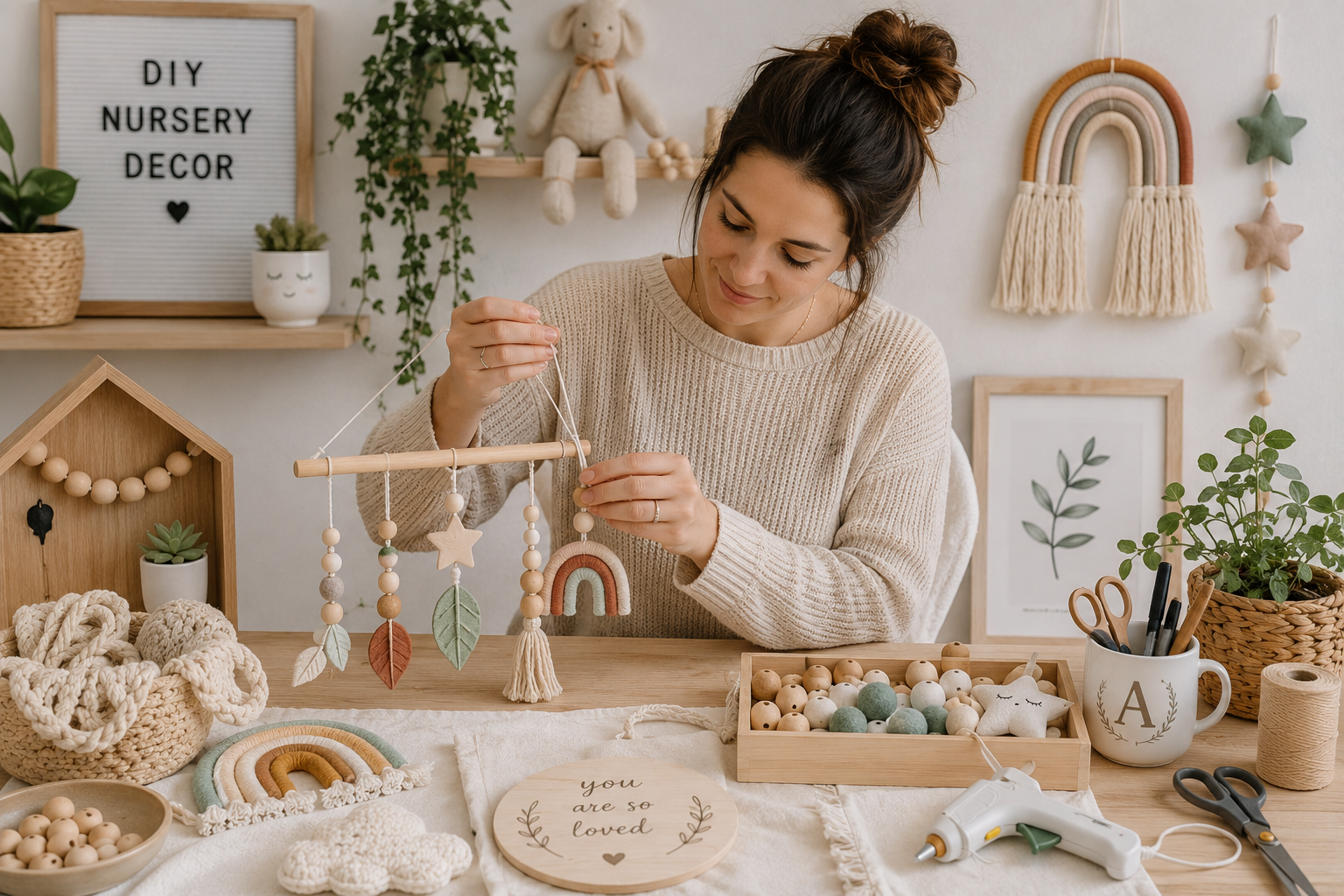
What Does DIY Nursery Decor Cover?
DIY nursery decor means decorating a baby's room yourself using handmade, upcycled, or printable pieces rather than buying everything ready-made. It typically covers the decorative, non-structural elements of the room: wall art and prints, a hanging mobile, shelf styling, garlands and bunting, a name banner, soft furnishings, and finishing touches that tie a color scheme together. It can also include budget-friendly furniture hacks, such as turning a standard dresser into a changing station. DIY decor focuses on look and feel, not on the safety-critical gear like the crib and mattress, which should always meet current safety standards. The appeal is threefold: it costs far less than a fully bought nursery, it lets you personalize every detail, and it gives the room a handmade warmth that store-bought sets rarely have.
Why Decorate the Nursery Yourself
Beyond the obvious savings, doing it yourself has real advantages:
- It costs a fraction of the price. A printable, a frame, and an afternoon often replace a pricey piece of wall art.
- Everything matches your vision. You control the exact colors, so nothing clashes.
- It is personal. Handmade touches and your baby's name make the room one of a kind.
- It is flexible. Swap a garland or reprint art as the room grows with your child.
If you want the quick-win version first, our list of 19 budget DIY nursery decor ideas is a great place to start gathering inspiration.
Start with a Plan: Color Scheme and Theme
Before you make anything, decide on a palette. A coherent color scheme is what makes a budget nursery look intentional instead of pieced together. Pick one main color, one or two supporting tones, and a neutral, then repeat that combination across art, textiles, and accents.
A few approaches that consistently look good:
- Soft neutrals (cream, oat, greige) for a calm, timeless base you can accent over time.
- Gentle greens like sage, which feel fresh and work for any baby. Our sage green nursery decor ideas show the palette in action.
- Boho and earthy textures in terracotta, rust, and natural wood. See our boho nursery DIY decor ideas.
- Gender-neutral schemes that skip pink-or-blue entirely, covered in our gender-neutral nursery ideas.
For the full method of choosing and pairing shades, including which colors photograph well and grow with your child, read our guide to nursery color schemes.
Nursery Safety Comes First
Decor is the fun part, but a nursery has to be safe before it is pretty. Keep the decorative choices from interfering with safe sleep and you can decorate freely around them.
The crib should follow current safe-sleep guidance: a firm, flat mattress, a fitted sheet, and nothing else inside. Soft items, pillows, bumpers, and hanging decorations do not belong in the sleep space. A hanging mobile must be attached securely and well out of the baby's reach, and removed once your baby can push up on hands and knees or reach it, which is often around four to five months. Anchor all furniture to the wall to prevent tip-overs, keep cords from blinds and mobiles far from the crib, and place wall art and shelves so nothing can fall into the crib. For current guidance, see the American Academy of Pediatrics at HealthyChildren.org and crib safety and recall information from the U.S. Consumer Product Safety Commission.
Mobiles deserve special attention, so we wrote a dedicated guide to DIY crib mobile safety. If you are painting, choose a low-VOC or zero-VOC paint and ventilate well; the U.S. EPA's indoor air quality resources explain why this matters for a baby's room.
DIY Wall Art and Decor
Walls give you the biggest visual payoff for the least money, which is why they are the best place to start. A few high-impact, low-cost options:
- Printable art. Download, print, and frame coordinated prints in minutes. Our printable nursery wall art gives you instant, frame-ready designs.
- A name banner. A personalized banner above the crib or dresser is a signature nursery piece. Make one with our DIY name banner tutorial.
- Garlands and bunting. Soft, simple, and endlessly customizable. Follow our DIY garland and bunting tutorial.
- Framed fabric or wallpaper samples for an easy, textured gallery wall.
For a full menu of approaches, from gallery walls to handmade pieces, see our DIY nursery wall art ideas.
How to Style a Simple Gallery Wall
A gallery wall looks designer but is one of the easiest budget projects. Choose three to five prints that share a palette, pick frames in one or two finishes for a cohesive look, and lay everything out on the floor before you touch the wall. Aim for even spacing of a couple of inches between frames, and hang the arrangement so its center sits at eye level. Mixing one or two sizes adds interest without chaos. Because the prints are printable, you can swap a design later for the cost of a sheet of paper, which makes a gallery wall the most flexible decor in the whole room.
Make a DIY Baby Mobile
A handmade mobile is the centerpiece many parents are proudest of, and it is surprisingly simple to make from felt, paper, wood, or yarn. The key is to match it to your palette and, above all, to hang it safely and out of reach. Popular handmade styles include felt shapes like clouds, stars, or leaves, folded paper or origami forms, simple wooden rings with hanging accents, pom-pom and yarn designs, and pressed-felt animals. Choose lightweight materials, keep the strings short and secure, and balance the pieces so the mobile hangs evenly. Our step-by-step DIY baby mobile tutorial covers materials, balancing, and safe installation, and pairs directly with the crib mobile safety guidance above. Remember that a mobile is decorative and visual: it is meant to be admired and then removed before it can ever be reached.
Budget Furniture Hacks
Furniture is usually the most expensive part of a nursery, so smart hacks save the most money. The classic move is turning a regular dresser into a changing table, which gives you storage and a changing surface in one piece, often for far less than a dedicated changing table. Our guide on how to turn a dresser into a changing table covers what to buy, how to secure the changing pad, and the all-important step of anchoring the dresser to the wall.
Open shelving is another budget hero. A few well-placed shelves add storage and a spot to style books, baskets, and keepsakes. For arrangement ideas that look styled rather than cluttered, see our nursery shelf styling ideas. Whatever furniture you use, anchor it to the wall to prevent tip-overs, a free and essential step explained by the CPSC's Anchor It! campaign.
Soft Furnishings: Rugs, Curtains, and Textiles
Textiles add the warmth and softness that make a nursery feel cozy, and they are an easy place to repeat your palette. A soft rug anchors the room and creates a comfortable spot for feeding or play, while curtains do double duty by adding color and helping darken the room for naps. Look for blackout panels if your nursery gets a lot of light. Cushions, a throw for the feeding chair, and a basket of soft blankets pull the scheme together without much cost, and many can be found secondhand or made from inexpensive fabric. Keep all soft items out of the crib itself; their place is on the chair, the floor, and the shelves, never the sleep space. Choosing two or three textures in your chosen colors is usually enough to make the room feel finished.
Lighting That Sets the Mood
Lighting is one of the most overlooked parts of a nursery, yet it shapes how the room feels at every hour. Aim for layers: soft general lighting for daytime, and a warm, dim option for night feeds and bedtime. A dimmable lamp or a warm-toned night light makes 3 a.m. far gentler on everyone, and avoids the harsh overhead glare that wakes a drowsy baby. String lights or a small accent lamp on a shelf add a cozy glow and a decorative touch. Keep all cords well away from the crib and secured, and choose bulbs that stay cool to the touch. Thoughtful lighting costs little but instantly makes a nursery feel calm and intentional.
Personal and Keepsake Touches
The details that make a nursery truly yours are the personal ones. A framed first handprint, a print with your baby's name and birth details, or a small gallery of keepsakes turns a nicely decorated room into a meaningful one. These touches cost almost nothing and become some of the pieces you treasure most. Our baby handprint keepsakes guide walks through making a frame-worthy print, and printable nursery wall art can include name and birth-stat designs to hang above the crib. If the nursery is also a gift-giving moment, our newborn gifts guide pairs beautifully with a handmade room.
Decorating Small or Tricky Spaces
Not every nursery is a spacious dedicated room. Many parents are working with a small bedroom, a shared room, or a nook. The trick is to use vertical space, choose multi-purpose furniture, keep the palette light and consistent, and resist overfilling. A compact nursery can feel just as calm and complete as a large one when it is planned well. Our guide to small nursery ideas for tiny spaces is full of space-saving layouts and storage tricks.
Style Spotlights
If you want a clear direction to follow, pick a style and let it guide every choice:
| Style | Palette | Signature DIY pieces |
|---|---|---|
| Boho | Terracotta, cream, wood | Macrame, woven wall hangings, natural garlands |
| Sage green | Sage, white, light wood | Botanical prints, felt-leaf mobile |
| Gender-neutral | Oat, greige, soft accents | Abstract printables, simple name banner |
| Minimal modern | White, black, natural | Line-art prints, clean open shelves |
Dig deeper into the most popular looks with our boho nursery decor, sage green nursery, and gender-neutral nursery guides.
Budget Breakdown: How to Keep Costs Down
The biggest savings come from deciding what to make, what to buy secondhand, and what to splurge on. As a rule of thumb: spend on safety-critical gear, save on decor.
- Make: wall art, mobile, garland, name banner, shelf styling. These are cheap and high-impact.
- Buy secondhand or hack: dressers, shelves, baskets, decorative furniture.
- Buy new: the crib and mattress, which should meet current safety standards.
- Use printables: they replace expensive art for the cost of paper and ink.
For dozens of low-cost project ideas in one place, our 19 budget DIY nursery decor ideas shows exactly where to trim spending without trimming style.
To make the savings concrete, consider how the numbers compare. A set of bought nursery prints can run well over fifty dollars, while a printable set plus inexpensive frames often comes in under twenty. A store-bought mobile can cost thirty to fifty dollars, but a felt or paper one made at home costs only a few dollars in materials. A dedicated changing table might be a hundred dollars or more, while a secondhand dresser fitted with a changing pad does the same job for far less and stays useful for years. Spreading these swaps across the whole room is how families decorate a complete nursery for a small fraction of a fully bought one, with a result that looks more personal, not less.
Putting It All Together: A Simple Plan
- Choose your palette and style first, so every later choice coordinates.
- Sort out safety: crib, anchoring, and a plan for mobile placement.
- Tackle the walls: printables, a name banner, and a garland for instant character.
- Add the mobile as your handmade centerpiece, hung safely out of reach.
- Hack the furniture: dresser-to-changing-table and a shelf or two.
- Style the details: books, baskets, and keepsakes on the shelves.
- Step back and edit. Remove anything that feels cluttered. Calm beats busy.
Common Mistakes to Avoid
- Skipping the palette. Without a plan, the room looks mismatched.
- Putting decor in the crib. The sleep space stays bare. Always.
- Hanging a mobile within reach. Keep it high and remove it on time.
- Not anchoring furniture. Every dresser and shelf gets secured to the wall.
- Overfilling the room. A few good pieces beat many small ones.
- Forgetting ventilation when painting. Use low-VOC paint and air the room.
Frequently Asked Questions
How can I decorate a nursery on a small budget?
Focus on high-impact, low-cost projects: printable wall art, a handmade mobile, a name banner, and a garland. Buy furniture secondhand or hack a dresser into a changing table, and reserve your budget for the crib and mattress.
What should I decorate the nursery with first?
Start with the walls, since they give the biggest visual change for the least money. Printables, a name banner, and a garland transform a room quickly, then add a mobile and shelf styling.
Is it safe to hang a mobile over the crib?
A mobile can hang over the crib if it is attached securely and kept well out of reach, but it should be removed once your baby can push up or reach it, often around four to five months. It is decorative, not a sleep item.
What color is best for a nursery?
Calm, soft tones like neutrals and sage green work well and grow with your child. Choose one main color, a supporting tone, and a neutral, then repeat that combination across the room for a coordinated look.
Can I make a nursery look expensive without spending much?
Yes. A consistent palette, framed printables, a handmade mobile, and styled shelves read as high-end. The polished look comes from coordination and editing, not from how much you spend.
Key Takeaways
- DIY nursery decor creates a personal, high-end-looking room for far less than a bought nursery.
- Plan the palette first; coordination is what makes a budget room look intentional.
- Safety before style: bare crib, anchored furniture, and a mobile kept out of reach.
- Make the decor, save on furniture, and spend on safety gear.
- Printables, a mobile, a name banner, and shelf styling deliver the most impact for the least money.
Ready to begin? Pick your palette with our nursery color schemes guide, then grab a set of printable nursery wall art to fill the walls in an afternoon.