How to Make a Silicone Bead Pacifier Clip (DIY Tutorial)
The silicone bead pacifier clip is the most popular style for good reason: the beads are soft, soothing on sore gums, wipe clean in seconds, and come in beautiful modern colors. This tutorial shows you exactly how to make one at home, from choosing safe food-grade beads to assembling and safety-checking your finished clip. It is a beginner-friendly project you can complete in about 15 to 20 minutes.
If you have never made a clip before, this is the easiest style to start with. Let's gather supplies and make one together.
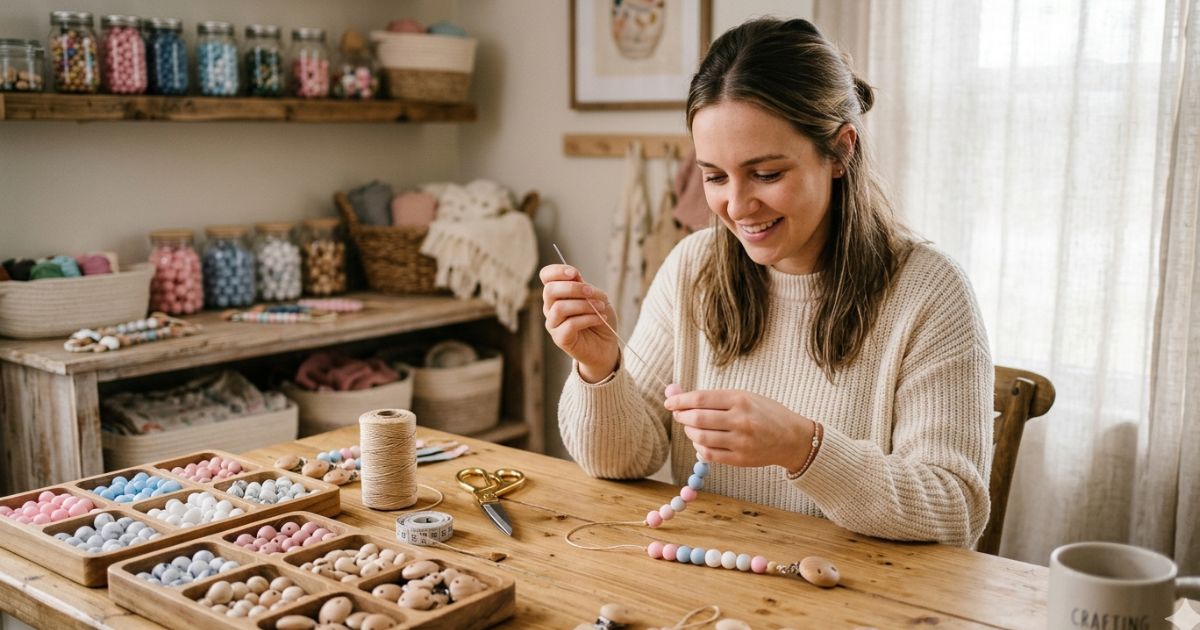
Why Silicone Beads?
Silicone has become the go-to material for handmade pacifier clips, and once you have used one you'll understand why. The beads are soft and gentle, which doubles as soothing relief during teething. They are non-porous, so they wipe clean and do not soak up drool the way fabric does. Food-grade silicone is also free of common nasties when you choose quality beads, and it comes in a huge range of colors and shapes for endless design options. Compared with wood, which can crack if soaked, and fabric, which frays over time, silicone is the lowest-maintenance choice. For a full comparison, see our guide on fabric vs silicone vs wood pacifier clips.
What You'll Need
Supplies
- Food-grade silicone beads (round, abacus, or shaped, in your colors)
- A baby-safe pacifier clasp (metal or plastic, no sharp edges)
- Strong nylon cord rated for pacifier clips
- Scissors, a measuring tape, and a fray-stopper or lighter for the cord ends
Choosing Safe Silicone Beads
Safe silicone beads are food-grade and free of BPA, lead, phthalates, and cadmium. Buy from reputable sellers who state these standards clearly, and avoid cheap, unlabeled beads. Choose beads with smooth, even holes that fit snugly on your cord, with no large gaps that let beads slide or rattle loose. A mix of sizes and a single shaped focal bead make a clip look professional, but keep every bead securely threaded. Whatever you pick, each bead must be firmly held in place so nothing can detach and become a choking hazard.
For more on materials across the whole clip, see our guide to safe pacifier clip materials, and look for components carrying a recognized non-toxic seal such as the AP seal from the Art & Creative Materials Institute.
The Safe Length Rule
Before you cut anything, remember the length rule. The U.S. Consumer Product Safety Commission recommends a pacifier clip be no longer than necessary, and preferably no longer than 7 to 8 inches in total length, to reduce strangulation risk. Always measure the finished clip, fully extended. See the CPSC's pacifier and teether clips FAQ and our guide on how long a pacifier clip should be.
Step-by-Step: Making a Silicone Bead Clip
- Plan your pattern and length. Lay out your beads in the order you like, then cut your cord so the finished clip will land within the safe 7 to 8 inch range once everything is on.
- Attach the clasp. Thread one end of the cord through the clasp loop, fold it back, and tie a firm double knot.
- Thread the beads. Slide your silicone beads onto the cord in your planned pattern, pushing them snug against the clasp end with no gaps.
- Form the pacifier loop. At the free end, make a small loop sized to fit your pacifier ring and knot it securely so it cannot slip open.
- Secure and seal. Double-knot every join, trim excess cord, and seal the ends so they cannot fray.
- Tug-test and measure. Pull firmly on each bead, the clasp, and both loops, then confirm the finished length is within the safe range.
Design Ideas
Once you have the basic clip down, the fun begins:
- Color blocking: group two or three coordinating tones for a clean, modern look.
- Add a wooden accent: one wooden bead or ring adds warmth to an all-silicone clip.
- Spell a name: silicone letter beads make a personalized keepsake. Follow our personalized name pacifier clip DIY.
- Theme it: match nursery colors or the season for an easy, thoughtful gift.
Bead Shapes and Styles
Part of the fun of silicone is the variety. Round beads give a clean, classic look, abacus or lentil beads add a flatter, modern feel, and shaped focal beads (stars, hearts, hexagons, or animals) become a sweet centerpiece. Mixing one or two sizes with a single focal bead reads as professional without much effort. Keep the overall design simple and balanced, and remember that fewer, well-chosen beads often look more polished than a crowded cord.
Troubleshooting
- Beads slide around: your cord is too thin for the bead holes. Use a thicker cord or beads with smaller holes.
- Knots slip: use a double or triple knot and seal the end so it cannot work loose.
- Clip is too long: remove a bead or two and re-measure. Shorter is always safer.
- Cord frays: trim and re-seal the end with a fray-stopper or a careful touch of heat.
- Clasp feels weak: swap it for a sturdier baby-safe clasp before use.
Make a Set to Gift
Because silicone clips are quick and inexpensive, they make wonderful handmade gifts. Make two or three in coordinating colors, or pair a clip with a teether and a bib for a put-together present. For ready-to-copy combinations, see our pacifier clip gift set ideas.
Cleaning Your Silicone Clip
One of silicone's biggest perks is easy cleaning. Wash the beads with warm water and mild soap, spot-clean and dry the metal clasp to prevent rust, and dry everything fully before the next use. Because silicone is non-porous, it does not trap drool or odors the way fabric can. For a complete routine, see our guide to cleaning and caring for pacifier clips.
Safety Checklist Before First Use
- Finished length is within the safe 7 to 8 inch range, measured fully extended.
- Every bead, knot, and the clasp is tight, with nothing loose.
- Cord ends are sealed and not fraying.
- The clasp opens and closes firmly with no sharp edges.
- You will attach it to clothing only, never around the neck, and remove it for sleep.
Frequently Asked Questions
Are silicone bead pacifier clips safe?
Yes, when made from food-grade silicone and assembled securely. Keep the finished clip within the safe length, attach it to clothing only, never the neck, remove it during sleep, and tug-test every bead before use.
What silicone beads are safe for babies?
Choose food-grade silicone beads that are BPA-free, lead-free, phthalate-free, and cadmium-free, from a reputable seller. Make sure each bead fits snugly so none can slide loose.
How long should a silicone bead pacifier clip be?
The CPSC recommends no more than 7 to 8 inches in total length, measured on the finished clip fully extended. When in doubt, make it shorter.
Can silicone clips help with teething?
The soft beads can be soothing on sore gums, which is one reason silicone is so popular. Always supervise, and use the clip only on clothing during awake time.
How do I clean a silicone pacifier clip?
Wash the silicone beads with warm water and mild soap, dry the metal clasp to prevent rust, and let everything dry fully before reuse. Silicone is non-porous, so it cleans up easily.
Key Takeaways
- A silicone bead clip is soft, soothing for teething, and the easiest style to clean.
- Choose food-grade beads that are BPA-, lead-, and phthalate-free, and thread them snugly.
- Keep the finished clip within the safe 7 to 8 inch length.
- Secure every knot, seal the cord ends, and tug-test before use.
- Use it on clothing only, never the neck, and remove it for sleep.
Want other styles and the full safety picture? Head back to our complete handmade pacifier clips guide, try the general beginner clip tutorial, or browse the best clips for newborns if you'd rather buy.