Handmade Pacifier Clips: The Ultimate DIY & Buying Guide
A handmade pacifier clip is one of those small things that quietly saves your sanity. No more pacifiers launched onto grocery store floors, no more frantic diaper-bag digging, no more sterilizing a soother that just rolled under the stroller. A good clip keeps the pacifier attached to your baby, clean and within reach, and a handmade one lets you match it to an outfit, a nursery theme, or a gift.
This guide covers everything you need, whether you want to make your own, buy a safe one, or eventually sell them. We'll walk through what a pacifier clip actually is, the US safety rules that matter most (including the recommended length and which materials are safe), a clear step-by-step for making one at home, and how to clean, attach, and gift them. By the end you'll know exactly how to make or choose a clip that is genuinely safe for your baby.
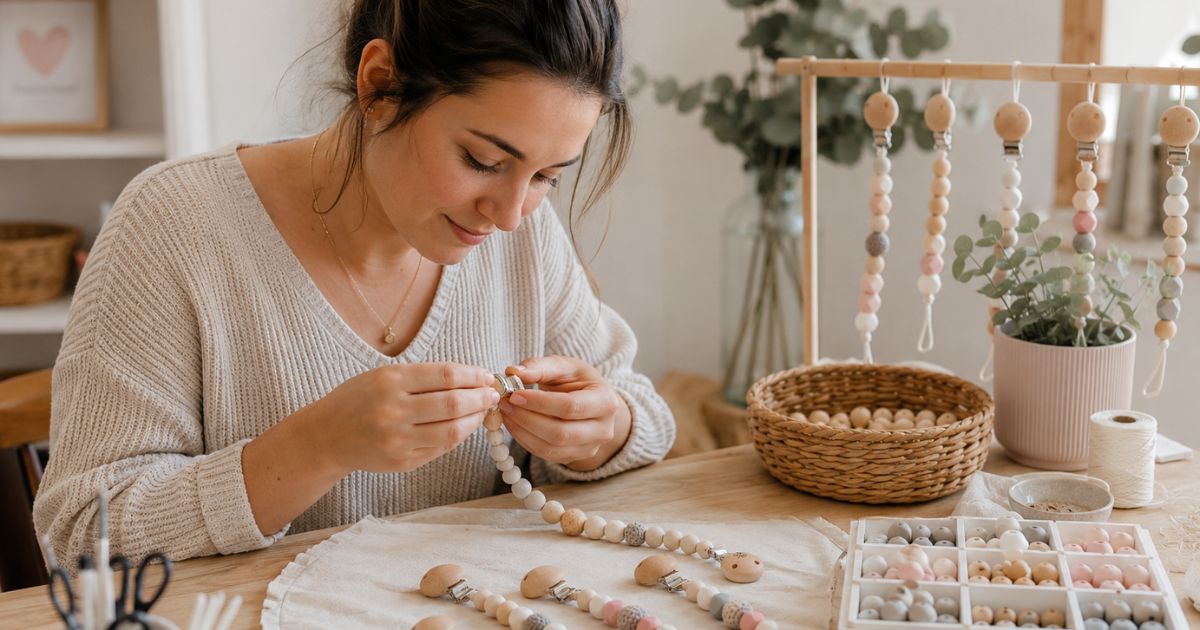
What Is a Pacifier Clip?
A pacifier clip is a short strap with a fastener on one end and a loop on the other. The fastener attaches to your baby's clothing, and the loop holds the pacifier, a teether, or a small soft toy. Its job is simple: keep the soother from falling to the floor, getting lost, or being dropped repeatedly. Handmade clips are usually built from food-grade silicone beads, wooden beads or rings, or fabric ribbon, finished with a sturdy metal or plastic clasp. Because a clip attaches near a baby's face and neck, it is treated as a safety-sensitive item in the US, with rules about length and materials. A well-made clip is short, securely assembled, made from non-toxic parts, and used only on clothing, never around the neck.
Why Use a Pacifier Clip
If your baby uses a pacifier, a clip pays for itself within a week. Here is why parents reach for one:
- Fewer drops and less mess. The pacifier stays off dirty floors, so you sterilize far less often.
- Nothing gets lost. No more buying replacements after one vanishes at the park.
- It works for more than pacifiers. The same clip can hold a teether, a lovey, or a small toy.
- It is a lovely handmade gift. Personalized clips are a baby-shower favorite, and you can match them to any style.
Clips also double as a teether in many designs, since silicone beads soothe sore gums. If teething is your main concern, our roundup of the best pacifier clips for teething babies is a good next read.
When Can a Baby Start Using a Pacifier Clip?
A pacifier clip is only as relevant as the pacifier it holds, so timing follows your baby's pacifier use. Many families introduce a pacifier in the early weeks, and a clip can be used from the newborn stage as long as you follow the safety rules: short length, clothing-only attachment, and supervised, awake-time use. The American Academy of Pediatrics notes that pacifier use at sleep times is associated with a reduced risk of SIDS, but a clip or any cord should never be left on a sleeping baby, since the clip itself is a separate strangulation concern. In practice, that means the clip earns its keep during awake, supervised moments: car rides, stroller walks, grocery trips, and play. As your baby grows into the teething stage, a silicone clip pulls double duty as something safe to gnaw on. You can read more general pacifier guidance from the AAP at HealthyChildren.org, and our own explainer on pacifier clip safety covers the awake-versus-asleep rule in detail.
Are Pacifier Clips Safe? The US Safety Rules That Matter
This is the part to read carefully, because a pacifier clip sits close to your baby's face. The good news is that a clip is very safe when it follows a few well-established rules.
In the United States, the Consumer Product Safety Commission (CPSC) recommends that a pacifier clip be no longer than necessary to work, and preferably no longer than 7 to 8 inches in total length, to reduce any strangulation risk. The toy safety standard, ASTM F963, also limits cords and elastics attached to items for children under 18 months to less than 12 inches when measured fully extended under load. Clips must also use non-toxic materials and avoid small parts that could detach and become a choking hazard. You can read the CPSC's own guidance on the pacifier and teether clips FAQ.
A few practical safety rules follow from that:
- Keep it short. Aim for the 7 to 8 inch range, and never exceed the standard. Our guide to how long a pacifier clip should be shows you exactly how to measure.
- Never clip it around the neck. Attach it only to clothing, on the chest or shoulder area.
- Inspect before every use. Check for loose beads, fraying, or a weak clasp, and discard a damaged clip immediately.
- Use non-toxic materials only. Food-grade silicone and untreated, baby-safe wood are the standards. More on this below and in our deep dive on safe pacifier clip materials.
- Supervise. Remove the clip during sleep and unsupervised time.
For the full breakdown of the standards, including ASTM F963 and the relevant federal regulations, see our explainer on whether pacifier clips are safe. General pacifier-use guidance for parents is available from the American Academy of Pediatrics at HealthyChildren.org.
Pacifier Clip Materials: Silicone, Wood, Fabric, and Beads
The material you choose affects safety, durability, cleaning, and look. Here is how the main options compare.
| Material | Pros | Cons | Best for |
|---|---|---|---|
| Food-grade silicone | Easy to clean, soothes gums, waterproof | Costs a little more | Teething, everyday use |
| Wood beads / ring | Natural look, sturdy, biodegradable | Can crack if soaked; needs dry care | Neutral, boho styles |
| Fabric ribbon | Soft, endless prints, low cost | Absorbs drool, frays over time | Budget, patterned looks |
The safest pacifier clip materials are food-grade silicone and untreated or baby-safe finished wood, paired with a clasp free of sharp edges. Silicone beads should be BPA-free, lead-free, phthalate-free, and cadmium-free. Wooden beads should be smooth, unpainted or sealed with a non-toxic finish, and free of loose parts. Fabric straps should be tightly woven and well-stitched so they do not fray into a loose thread. Whatever the material, every component must be securely fastened so nothing can detach and become a small part a baby could choke on. When in doubt, choose certified silicone, which is the easiest material to keep both safe and clean.
If you are deciding between options, our side-by-side comparison of fabric vs silicone vs wood pacifier clips walks through each in detail.
How to Make a Handmade Pacifier Clip, Step by Step
Making a clip is a beginner-friendly project that takes about 15 to 20 minutes once you have your supplies. Here is the core method for a classic silicone bead clip.
What You'll Need
- Food-grade silicone beads (and a wooden bead or ring if you like)
- A baby-safe pacifier clasp (metal or plastic, no sharp edges)
- Strong nylon cord or satin ribbon rated for this use
- Scissors, a lighter or fray-stopper for cord ends, and a measuring tape
The Steps
- Measure and cut. Cut your cord so the finished clip will sit in the safe 7 to 8 inch range once assembled. Always measure the final length, not the starting cord.
- Attach the clasp. Thread one end of the cord through the clasp's loop, fold it back, and secure it tightly.
- Add the beads. Slide your silicone (and optional wooden) beads onto the cord in your chosen pattern.
- Form the pacifier loop. At the free end, create a small loop that fits your pacifier's ring, and knot it securely.
- Secure and seal the ends. Double-knot, then seal cord ends so they cannot fray. Tug firmly on every part to confirm nothing slips.
- Final safety check. Measure the finished length, confirm it is within the safe range, and inspect every bead and knot.
Prefer a fully illustrated walkthrough? Follow our beginner tutorial on how to make a pacifier clip, or the dedicated silicone bead pacifier clip tutorial for that specific style. To add a baby's name, see our personalized name pacifier clip DIY. If you'd like ready-made sizing layouts, grab our free printable pacifier clip patterns.
Design Ideas and Style Inspiration
Once you have the safe basics down, the fun part is design. Because a clip uses just a handful of beads, you can make a different one for every outfit or theme without spending much. A few directions parents love:
- Minimalist neutrals. Cream, sand, and muted sage silicone beads with a single wooden ring suit a calm, modern nursery.
- Boho and earthy. Mix wood and silicone in warm terracotta or olive tones for a natural, handmade look.
- Bright and playful. Bold primary beads catch a baby's eye and make great photos.
- Personalized name clips. Letter beads spelling the baby's name turn a simple clip into a keepsake and a standout gift.
- Seasonal and holiday. Themed colors for a first Christmas or a spring shower make easy, memorable presents.
To spell out a name safely and neatly, follow our personalized name pacifier clip DIY. If you decorate a nursery to match, our DIY nursery decor guide will help you carry the palette across the whole room.
How to Attach and Use a Pacifier Clip Safely
Even a perfectly made clip needs to be used correctly. Clip the fastener to your baby's clothing near the chest or shoulder, where the pacifier can reach the mouth without slack pooling around the neck. Thread the loop through the pacifier ring, teether, or toy, and pull it snug. Never attach a clip around your baby's neck, never use it in the crib during sleep, and remove it for unsupervised time. Our step-by-step on how to attach a pacifier clip correctly covers placement and common errors in full.
Cleaning and Caring for Your Pacifier Clip
Pacifier clips collect drool and food, so regular cleaning matters. Silicone parts can usually be washed with warm water and mild soap, while metal clasps should only be spot-cleaned and kept dry to prevent rust. Wooden beads should never be soaked, since water can crack or warp them, so wipe them with a barely damp cloth and let them dry fully. Always dry every part completely before the next use, and inspect for damage as you go. For a material-by-material routine, see our guide to cleaning and caring for pacifier clips.
Buying Guide: How to Choose a Safe Pacifier Clip
Not everyone wants to make their own, and that is completely fine. When buying, look for a clip that states its length, names its materials, and ideally references CPSIA or ASTM F963 testing. Choose food-grade silicone or baby-safe wood, a smooth clasp, and tight, secure assembly with no loose beads. Avoid anything longer than the safe range or with small parts that feel like they could pull off.
For specific recommendations, see our reviews of the best pacifier clips for newborns and the best pacifier clips for teething babies.
Quick safety checklist before every use:
- Length is within the safe 7 to 8 inch range, measured fully extended.
- Every bead, knot, and the clasp is tight, with nothing loose or cracked.
- No frayed cord ends or worn ribbon.
- The clasp opens and closes firmly and has no sharp edges.
- You will attach it to clothing only, never around the neck, and remove it for sleep.
If any item fails, retire the clip. A few dollars of materials is never worth the risk.
Personalized Clips and Gift Ideas
Handmade pacifier clips shine as gifts because they feel personal and cost very little to make. A clip with the baby's name, made in nursery colors, instantly stands out at a shower. You can also bundle a clip with a teether, a bib, or a small keepsake for a put-together present. Browse our pacifier clip gift set ideas for baby showers for ready-to-copy combinations, and the personalized name clip tutorial to make it yourself. If you want a broader gift list, our complete newborn gifts guide and baby handprint keepsakes guide pair well with a handmade clip.
Turning Pacifier Clips into a Small Business
Because they are quick, inexpensive, and easy to personalize, pacifier clips are a popular first product for handmade sellers. Materials for a single clip often cost just a few dollars, while finished clips commonly sell for several times that, which is part of the appeal. The catch is that selling to the public means meeting the safety rules covered above, including third-party testing and proper labeling under US regulations. Before you list anything, it is worth reading the official guidance: the CPSC's toy safety business education pages and the ASTM F963 standard itself. From there, you can price for profit, photograph your clips well, and decide where to sell. If you are thinking about an Etsy shop, our guide on how to make pacifier clips to sell walks through compliance, pricing, and getting started the right way, and our printable pacifier clip patterns give you consistent, repeatable sizing for batches.
Pacifier Clip, Holder, or Case: What's the Difference?
It is easy to mix these up. A pacifier clip keeps the soother attached to clothing so it does not drop. A pacifier holder or case is a small container that protects a clean pacifier inside the diaper bag between uses. They solve different problems, and many parents carry both: the clip for active, awake moments, and the case to keep a spare pacifier clean on the go. A clip is the handmade-friendly option here, since a case is usually a molded plastic product. If you want the soother kept clean and reachable while your baby is awake, the clip is what you want.
Common Mistakes to Avoid
- Making the clip too long. Always measure the finished length and stay in the safe range.
- Loose or oversized beads. Anything that can detach is a choking hazard. Tug-test everything.
- Soaking wooden beads. Water cracks wood. Wipe and dry instead.
- Using around the neck. Clip to clothing only, never the neck.
- Skipping inspection. Check before every use and discard damaged clips.
- Unsealed cord ends. Fraying weakens the clip. Seal and double-knot.
Frequently Asked Questions
How long should a pacifier clip be?
In the US, the CPSC recommends a pacifier clip be no longer than necessary, and preferably no longer than 7 to 8 inches in total length, to reduce strangulation risk. Always measure the finished clip fully extended.
Are pacifier clips safe for newborns?
Yes, when used correctly. Keep the clip within the safe length, attach it only to clothing, never around the neck, remove it during sleep, and supervise use. Choose non-toxic, securely assembled materials.
What is the safest material for a pacifier clip?
Food-grade silicone is the safest and easiest to clean, followed by smooth, baby-safe wood. Whatever you choose, make sure beads are BPA-free, lead-free, and securely fastened so nothing can detach.
Can I make a pacifier clip myself?
Absolutely. With silicone beads, a baby-safe clasp, and strong cord, you can make one in about 15 to 20 minutes. Follow a tested tutorial, keep it within the safe length, and tug-test every part before use.
How do I clean a pacifier clip?
Wash silicone parts with warm water and mild soap, spot-clean and dry the metal clasp, and wipe wooden beads with a barely damp cloth without soaking them. Dry everything fully before the next use.
Can I sell handmade pacifier clips?
Yes, but selling to the public in the US means meeting safety rules, including testing and labeling under CPSIA and ASTM F963. Our Etsy guide explains exactly what is required before you list them.
Key Takeaways
- A handmade pacifier clip keeps the soother clean and within reach, and makes a lovely personalized gift.
- Keep it short: the CPSC recommends a total length of no more than 7 to 8 inches.
- Use non-toxic materials: food-grade silicone or baby-safe wood, with a smooth, secure clasp.
- Use it safely: clip to clothing only, never the neck, remove during sleep, and inspect before each use.
- Clips are easy to make, easy to gift, and can even become a small handmade business.
Ready to make your first one? Start with our beginner pacifier clip tutorial, then personalize it with a name clip or check the best clips for newborns if you'd rather buy.